
Why Understanding the Timeline Matters for Your Results
You may be experiencing:
- →Wondering when you will start feeling results
- →Unsure if slow progress means the treatment isn’t working
- →Wanting to know what week-by-week improvement looks like
- →Curious whether TMS results are permanent
- →Wondering what happens if you don’t respond
- →Trying to set realistic expectations before committing
One of the most important things we tell every patient before starting TMS is this: results are real, but they are gradual. The brain does not restructure overnight. What TMS produces is cumulative — building across the treatment course rather than arriving in a single moment.
Patients across Boca Raton and Fort Lauderdale who understand this going in are better equipped to recognize early signs of progress and stay committed through the full course of treatment. This page sets those expectations honestly.
TMS is not a switch. It is a process. Patients who understand that get better outcomes.
Why Understanding the Timeline Matters for Your Results
One of the most common reasons TMS doesn’t reach its full potential is premature discontinuation. Patients who stop treatment because they haven’t seen results by week three — when most changes occur between weeks three and six — may miss the window of maximum benefit.
Understanding the typical recovery arc helps you recognize what’s happening, trust the process, and complete the full course. We monitor your progress throughout and communicate clearly at every stage.
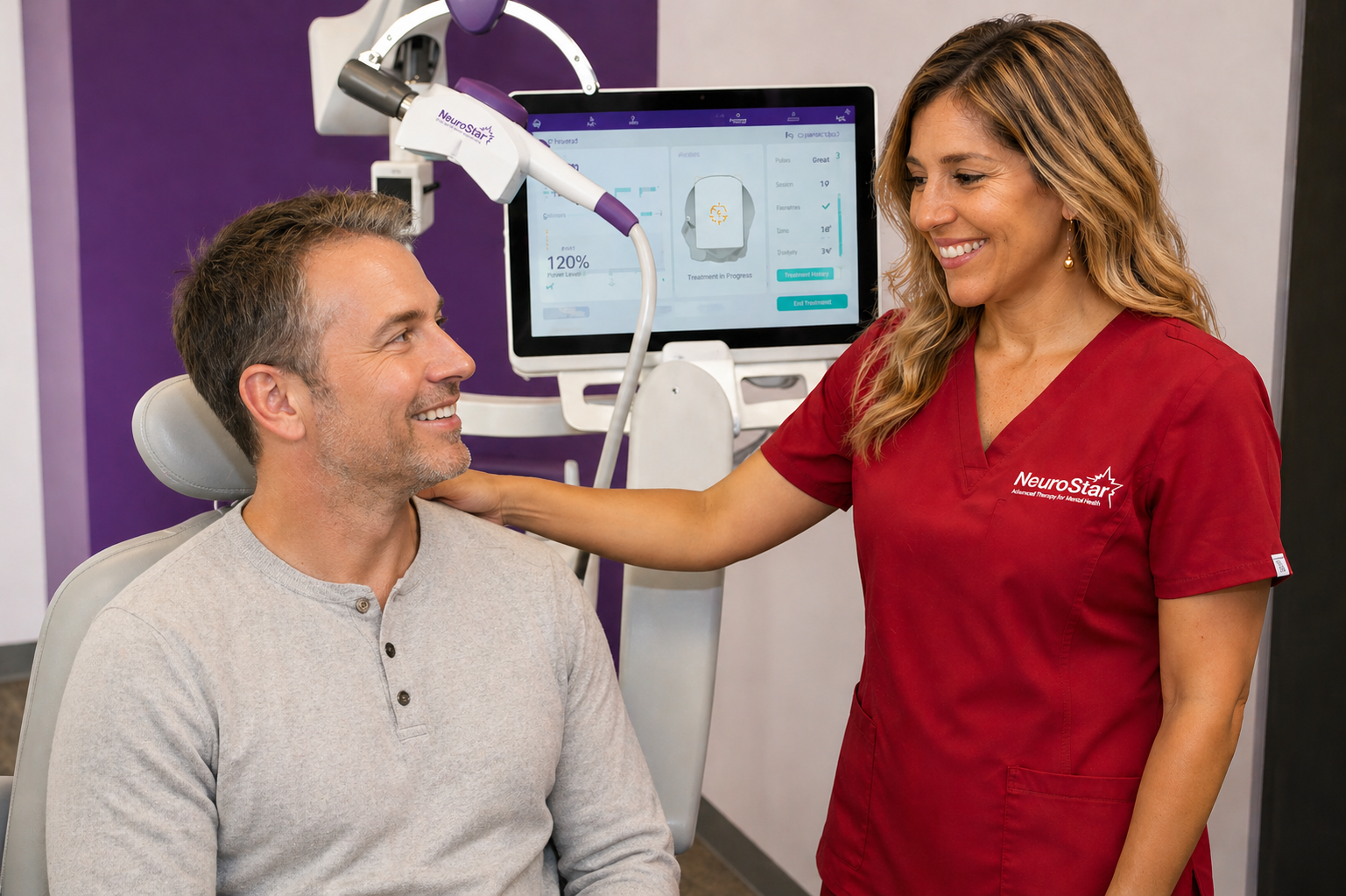

Week by Week — A Realistic Recovery Timeline
Weeks 1–2: Calibration and early adaptation
Most patients feel minimal change in the first two weeks. The brain is being stimulated but hasn’t yet reorganized. Some patients notice slight mood shifts or sleep changes. Scalp sensitivity is common and typically resolves.
Weeks 3–4: First signs of change
This is when most patients begin to notice something different. Small shifts — waking up without the usual weight, a moment of genuine interest in something. These early signals are significant even when they feel minor.
Weeks 5–6: Accelerating improvement
Symptom reduction becomes more consistent and noticeable. Energy, mood, cognitive clarity, and emotional responsiveness all tend to improve during this phase. Many patients describe week five as the turning point.
Weeks 7–9 and beyond: Consolidation
The final sessions reinforce the neural changes established throughout the course. Many patients continue improving for several weeks after their last session as the brain consolidates the new activity patterns.
Step by Step — From Evaluation to Relief
Free Consultation & Insurance Check
We review your treatment history, confirm your diagnosis, and verify insurance before anything else happens.
Personalized Brain Mapping
Your first session calibrates the device to your anatomy — identifying the exact location and magnetic intensity for your treatment.
36 Sessions Over 7–9 Weeks
Five sessions per week, approximately 20 minutes each. Drive yourself — no downtime, no disruption to your day.
Progress Monitoring Throughout
We track your symptom changes with validated tools and adjust the protocol if your response calls for it.
Sustained Relief
Many patients maintain meaningful improvement for one year or more following treatment completion.
What Full Recovery Looks Like
These are the outcomes patients describe after completing a full course of TMS — not after one or two weeks, but after the full treatment journey.
Consistent mood — not just good days
Not occasional relief, but a stable new baseline. Mood that holds rather than cycling back.
Sustained energy without effort
Not forcing yourself through the day. Actual energy — the kind you remember from before depression.
Thinking clearly and consistently
The cognitive restoration that TMS produces tends to be one of the most durable outcomes patients report.
Planning for the future again
The return of investment in what comes next. Goals, commitments, relationships — all becoming worth caring about again.
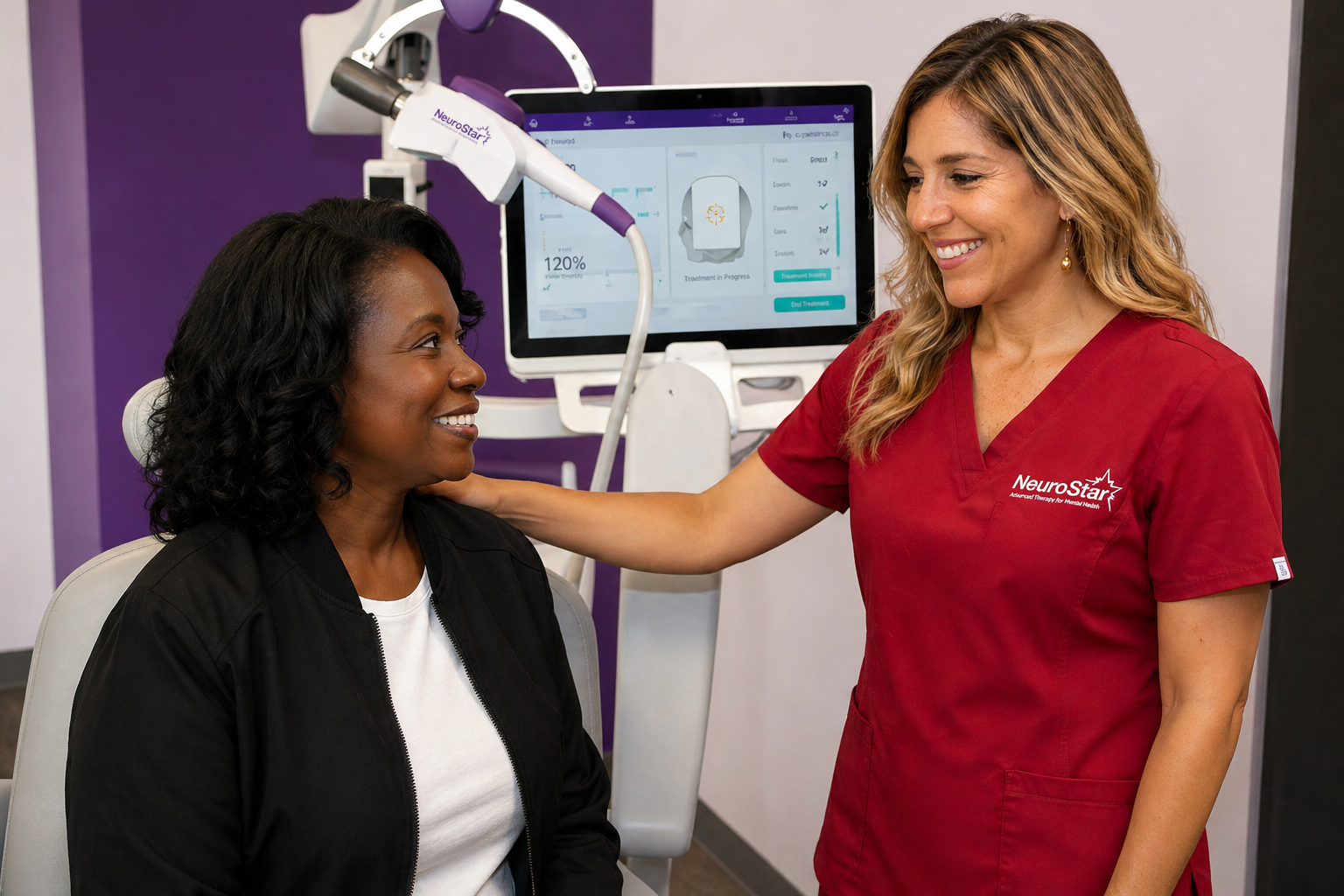
The Research Behind the Results
of patients in NeuroStar clinical trials responded with meaningful reduction in depression symptoms.
achieved full remission — no longer meeting the clinical threshold for major depressive disorder.
average duration of sustained symptom relief reported in long-term follow-up studies.
Results based on NeuroStar TMS clinical study data. Individual results may vary.
Heard From South Florida Patients
By week two I was frustrated — nothing seemed to be happening. By week four, something shifted. By week six I was a different person. My provider had told me to be patient. They were right.
I almost stopped at week three because I hadn’t seen anything dramatic. I’m glad I didn’t. The changes built slowly and then all at once. The full course was worth completing.
Understanding the timeline before I started made the difference. When week two felt like nothing, I wasn’t alarmed. When week four brought changes, I recognized them. Preparation mattered.
What Patients Ask Before Starting
Other Conditions We Help With
Starting TMS Therapy
Everything you need to know before your first session — the process, the consultation, and what to bring.
Learn more →
Treatment-Resistant Depression
Understanding why TMS works when medication hasn’t — the mechanism behind the results.
Learn more →
NeuroStar Overview
Watch our clinical overview video before starting treatment.
Learn more →
Ready to Start Your Recovery?
A free consultation is 30 minutes. We verify insurance before you commit and set honest expectations for your specific situation — before you decide anything.
Important Safety Information
NeuroStar TMS Therapy is indicated for the treatment of Major Depressive Disorder in adult patients who have failed to receive satisfactory improvement from prior antidepressant medication in the current episode. NeuroStar TMS Therapy is only available by prescription. The most common side effect is pain or discomfort at or near the treatment site. This is usually mild to moderate in severity and typically resolves within the first week of treatment. Rare risk of seizure (<0.1% per patient). For full safety information, visit neurostar.com.