
Why Mood Medication Doesn’t Always Clear the Fog
You may be experiencing:
- →Difficulty concentrating for more than a few minutes
- →Forgetting conversations, tasks, or words mid-sentence
- →Mental processing that feels slower than it used to be
- →Trouble making decisions that used to be automatic
- →Reading the same paragraph repeatedly without retaining it
- →Feeling cognitively dull even on days when mood is tolerable
Cognitive symptoms of depression — collectively called brain fog — affect an estimated 90 percent of people with major depressive disorder. Yet most treatment conversations focus on mood, leaving patients to manage the cognitive burden on their own.
Professionals across Boca Raton and Fort Lauderdale describe brain fog as the symptom that most affects their work performance, their relationships, and their confidence. TMS directly targets the prefrontal cortex — the brain’s executive function center.
When the brain can’t process clearly, every area of life suffers. Cognitive clarity is not a luxury — it is a treatment target.
Why Mood Medication Doesn’t Always Clear the Fog
Many antidepressants successfully reduce sadness while leaving cognitive symptoms largely unaddressed. Some actually worsen cognitive function through sedation, slowed processing, or memory effects. Patients often describe being emotionally stable but mentally clouded on medication.
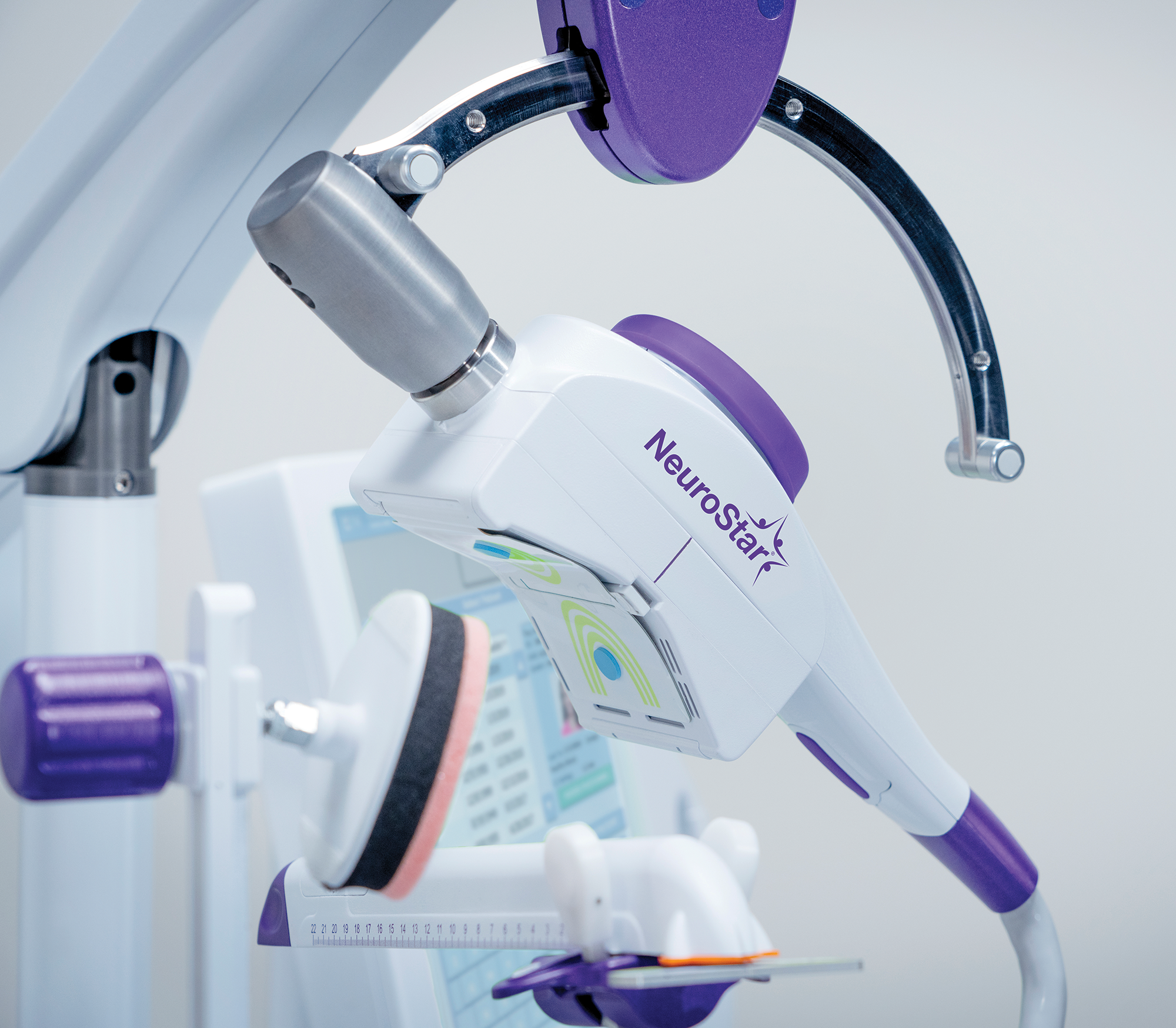
TMS targets the prefrontal cortex — the region governing concentration, working memory, decision-making, and cognitive processing speed. Stimulating this area directly addresses the cognitive dimension of depression that medication frequently misses.
.png)
Clearing the Fog — Targeting Cognitive Function Directly
Targets the prefrontal cortex — the seat of cognition
This is where concentration, working memory, and executive function live. TMS stimulates this region directly — the same area that depression consistently suppresses.
Cognitive improvements alongside mood improvements
Clinical data shows that TMS produces improvements in concentration, memory, and processing speed — not just emotional symptoms — as treatment progresses.
No medication-related cognitive dulling
TMS introduces nothing into your system. There is no sedation, no slowed processing, no memory effects from the treatment itself.
Cumulative effect across the treatment course
Each session builds on the last. Most patients notice cognitive changes between weeks two and five — a gradual clearing rather than a sudden shift.
Step by Step — From Evaluation to Relief
Free Consultation & Insurance Check
We review your treatment history, confirm your diagnosis, and verify insurance before anything else happens.
Personalized Brain Mapping
Your first session calibrates the device to your anatomy — identifying the exact location and magnetic intensity for your treatment.
36 Sessions Over 7–9 Weeks
Five sessions per week, approximately 20 minutes each. Drive yourself — no downtime, no disruption to your day.
Progress Monitoring Throughout
We track your symptom changes with validated tools and adjust the protocol if your response calls for it.
Sustained Relief
Many patients maintain meaningful improvement for one year or more following treatment completion.
What Cognitive Clarity Looks Like in Real Life
The fog lifting is one of the most consistently reported outcomes of TMS treatment — and one of the most practically significant.
Reading and retaining information again
Following a document, a book, or a conversation without losing the thread. Processing information the first time rather than the fourth.
Making decisions without paralysis
Choices that used to feel overwhelming becoming manageable again. The cognitive confidence to assess a situation and act on it.
Communicating clearly
Words coming when you reach for them. Following the thread of a conversation. Articulating thoughts without that frustrating half-second delay.
Professional performance returning
The sharpness, the quick thinking, the ability to handle complexity — the cognitive tools that careers depend on — restored.
The Research Behind the Results
of patients in NeuroStar clinical trials responded with meaningful reduction in depression symptoms.
achieved full remission — no longer meeting the clinical threshold for major depressive disorder.
average duration of sustained symptom relief reported in long-term follow-up studies.
Results based on NeuroStar TMS clinical study data. Individual results may vary.
Heard From South Florida Patients
I’m an attorney. Brain fog was destroying my career. I couldn’t follow arguments, I was losing words, I was re-reading briefs four times. TMS cleared that fog. By week six I was thinking at the level I remembered. It genuinely changed my professional life.
I thought I was developing early dementia. It was depression — and TMS treated it. The cognitive clarity that returned was more dramatic than the mood improvement, which was also significant. I feel like myself again.
My concentration was so bad I couldn’t read a paragraph. After TMS I finished two books in a month. That sounds small but it felt enormous. Like getting a part of myself back.
What Patients Ask Before Starting
Other Conditions We Help With
Mental Exhaustion
Brain fog and mental exhaustion are closely linked — TMS addresses both through the same neural pathway.
Learn more →
Working Professionals
Cognitive clarity is essential for professional performance. See how TMS fits a working schedule.
Learn more →
Treatment-Resistant Depression
Brain fog that hasn’t responded to medication often responds to TMS — which works through a different mechanism.
Learn more →
Ready to Think Clearly Again?
A free consultation is 30 minutes. We verify insurance before you commit. If TMS is right for you, we tell you exactly what to expect before you decide.
Important Safety Information
NeuroStar TMS Therapy is indicated for the treatment of Major Depressive Disorder in adult patients who have failed to receive satisfactory improvement from prior antidepressant medication in the current episode. NeuroStar TMS Therapy is only available by prescription. The most common side effect is pain or discomfort at or near the treatment site. This is usually mild to moderate in severity and typically resolves within the first week of treatment. Rare risk of seizure (<0.1% per patient). For full safety information, visit neurostar.com.