
High Performance on the Outside. Exhausted on the Inside.
You may be experiencing:
- →Dragging yourself through meetings when your mind feels empty
- →Losing interest in work that used to energize you
- →Using all your energy to appear fine at work, nothing left for home
- →Difficulty making decisions that used to feel automatic
- →Avoiding medication because of side effects that affect performance
- →Functioning but not thriving — for months or years
Many high-functioning professionals across Boca Raton and Fort Lauderdale live with depression that nobody around them would guess. The ability to push through is both a strength and a delay — the longer it goes unaddressed, the harder it gets to separate the depression from your baseline.
TMS doesn't require you to slow down to get better. It was specifically designed to fit into an active schedule without disrupting it.
"Most of my patients are surprised they can walk in, complete the session, and be at their desk within the hour."
Antidepressants Work for Many People — But Not Everyone
For working professionals, the side effects of antidepressants can create their own set of problems. Cognitive dulling, fatigue, weight changes, and emotional blunting can interfere with the very performance you're trying to protect.
Beyond side effects, a significant portion of patients — estimated at 30 to 40 percent — don't achieve full remission from medication alone. Partial improvement often means functioning at 60 or 70 percent of your capacity, indefinitely.
TMS targets the prefrontal cortex directly — the brain region responsible for mood, motivation, and executive function — without putting anything into your bloodstream. It works differently from medication because it works at a different level entirely.

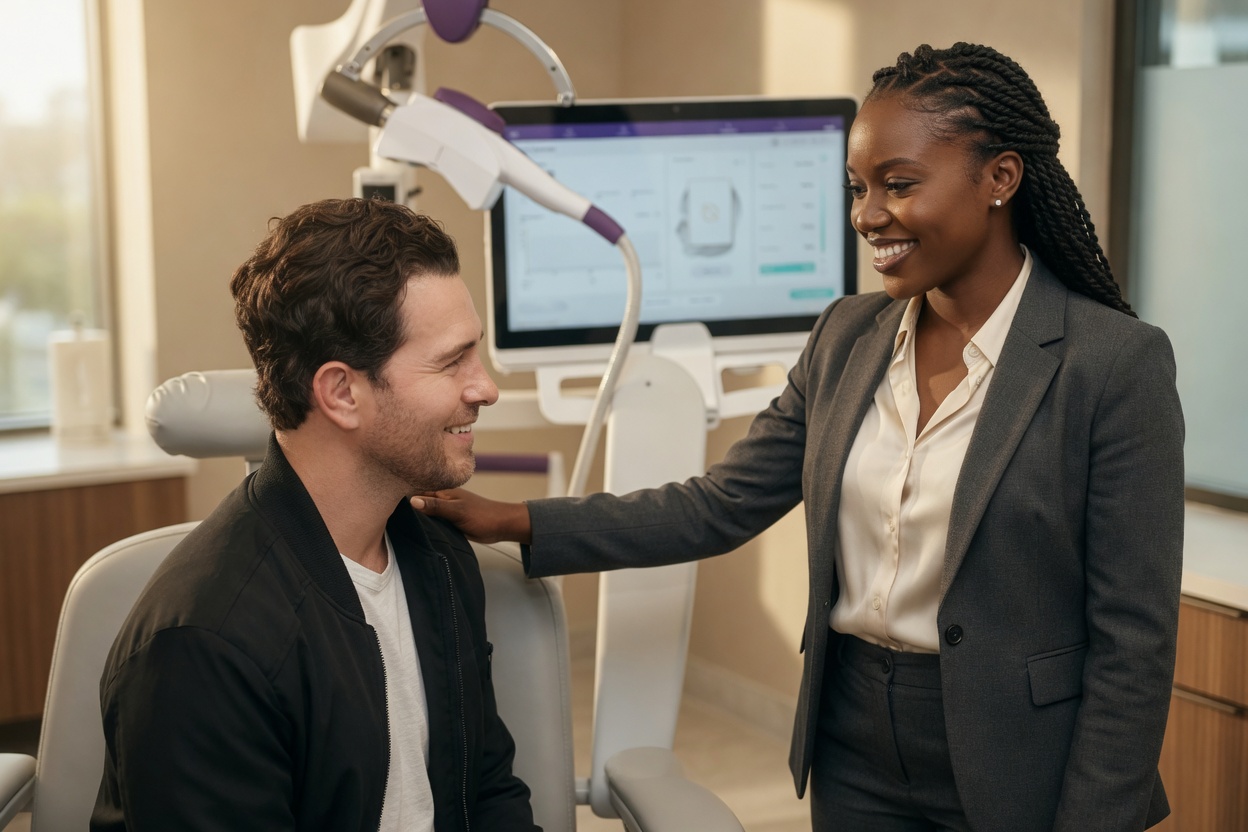
Precise. Efficient. Built for People Who Can't Afford to Stop.
Targets the source — not a workaround
NeuroStar stimulates the left prefrontal cortex — the area of the brain most associated with depression and executive function. That's where the disruption is. That's where TMS works.
No cognitive impairment
Unlike some medications, TMS does not cloud thinking, slow reaction time, or create the mental fog that affects professional performance. Most patients report the opposite as treatment progresses.
19–22 minutes per session
The full treatment course runs 36 sessions over 7–9 weeks. Professionals in Delray Beach and West Palm Beach schedule before or after work with no disruption to their day.
Drive yourself — every time
No sedation. No recovery period. You arrive, complete your session, and drive yourself wherever you need to go next.
From First Call to Full Course — Here's Exactly What Happens
Free Consultation — 30 Minutes
We review your diagnosis, treatment history, and current symptoms. We also run a full insurance verification so you know your out-of-pocket cost before anything else happens.
Mapping Session
Your first treatment visit calibrates the device to your specific brain — identifying the correct location and the right magnetic intensity for your anatomy.
Daily Sessions — 5 Days a Week
Each session runs approximately 20 minutes. Fort Lauderdale and Palm Beach professionals typically fit it in before or after work. You leave and go directly to your next obligation.
Weekly Progress Check-Ins
We track your symptom changes using standardized tools and adjust the protocol if needed. You're not left to figure out how it's going on your own.
Full Course Completion — Week 7 to 9
Most patients complete 36 sessions. Results continue building for several weeks after the final session. Many report sustained relief for a year or more.
Back to the Professional You Were Before Depression
Recovery for working professionals isn't just about feeling less depressed. It's about getting your edge back.
Thinking clearly in meetings again
Patients describe a return of quick thinking, decisiveness, and the ability to follow complex conversations without effort.
Caring about your work again
Motivation and engagement return. Work stops feeling like something to survive and starts feeling like something you're actually present for.
Energy left after work
Not draining everything just to get through the day. Having something left for family, exercise, and the life outside the office.
Emotional consistency
Not riding through cycles of numbness and overreaction. Steady, grounded, present — at work and at home.

South Florida Professionals Who Got Their Focus Back
I'm a project manager. I could not afford to be foggy or check out for weeks at a time. TMS fit into my lunch break. By week five I was thinking faster, sleeping better, and actually looking forward to work again.
Three antidepressants over four years. They either made me tired or made me numb. TMS was the first thing that actually lifted my mood without taking something away in return. I drove myself to every session.
I was skeptical about fitting 36 sessions into my schedule. It turned out to be the easiest part. Twenty minutes before work, every day. My team didn't even know I was doing it.
What You Need to Know Before You Start
Other Pages That May Apply to You
TMS for Brain Fog
Difficulty concentrating and mental cloudiness are common symptoms of depression — and common complaints from professionals who can't afford to be unclear.
Learn more →TMS for Mental Exhaustion
Running on empty for too long. TMS has shown meaningful results for patients whose primary symptom is profound fatigue rather than sadness.
Learn more →TMS After Antidepressants
If medication hasn't delivered the results you needed — or the side effects weren't worth it — TMS offers a drug-free alternative with strong clinical evidence.
Learn more →Fit TMS Into Your Schedule This Week
A consultation takes 30 minutes. We verify your insurance before you commit. Sessions fit into a lunch break. There's no reason to keep waiting.